
ApoB / ApoA-1 Ratio
Is your "normal" cholesterol hiding a health risk? Discover why the ApoB/ApoA-1 ratio is a better predictor of heart health and how to optimize your nutrition with Fueld.
Think your "normal" cholesterol results mean you're in the clear? A recent study reveals that nearly 20% of people with normal levels are still at high risk for heart issues. The secret lies in the balance between ApoB ("delivery trucks") and ApoA-1 ("cleanup crew"). We break down exactly what these markers mean, why the ratio is the true measure of health, and how to use Fueld to eat for a clear, healthy system rather than just a lower number on the scale.
The "Traffic Jam" Inside Your Arteries: A Simple Guide to ApoB & ApoA-1
We’ve all been taught to look at the scale or count calories to measure health. But as the recent study in Disease Markers shows, real health is about what’s happening on a microscopic level.
To understand why "normal" numbers can be misleading, we need to look at two key players in your blood: ApoB and ApoA-1.
If medical terms make your eyes glaze over, don't worry. Think of your bloodstream as a busy highway.
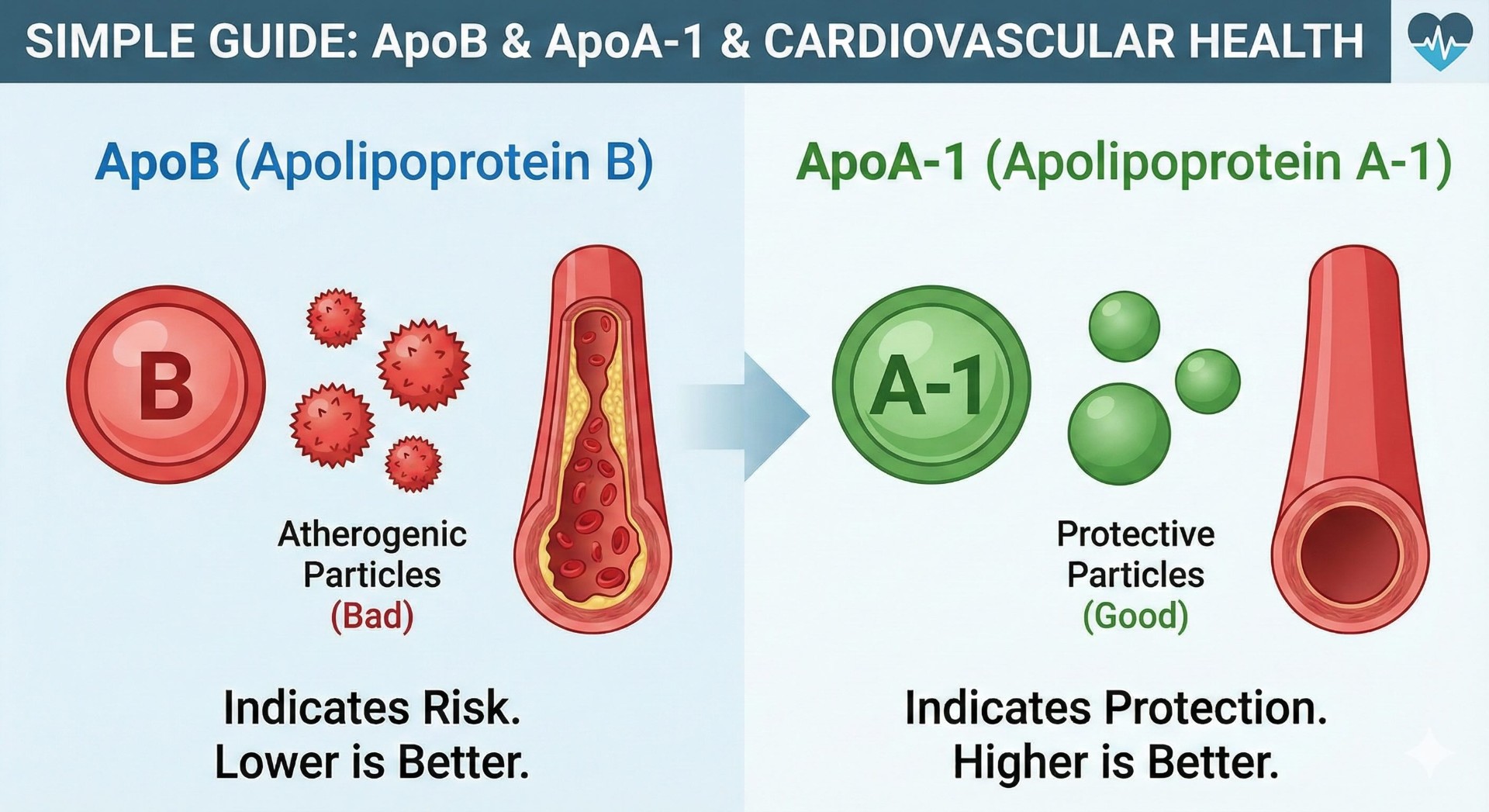
1. ApoB: The Delivery Trucks (The "Bad" Guys)
Apolipoprotein B (ApoB) is like a fleet of delivery trucks. Its job is to transport fat and cholesterol into your arteries.
- The Problem: If you have too many of these trucks on the road, they cause a traffic jam. Even if the trucks aren't fully loaded (meaning your standard cholesterol "concentration" looks normal), simply having too many of them increases the chance they will crash into your artery walls and create plaque.
- The Goal: You want fewer of these trucks on the road.
2. ApoA-1: The Cleanup Crew (The "Good" Guys)
Apolipoprotein A-1 (ApoA-1) is the cleanup crew. It acts like a tow truck or waste management vehicle. Its job is to pick up excess cholesterol from your arteries and carry it back to your liver to be flushed out.
- The Benefit: A large, active cleanup crew prevents traffic jams and keeps the highway clear.
- The Goal: You want as many of these cleanup vehicles as possible.
The Magic Number: The Ratio
The study highlights that your ApoB/ApoA-1 ratio is often a better predictor of heart health than just looking at "Total Cholesterol".
This ratio is simply a comparison: Do you have more Delivery Trucks (clogging things up) or more Cleanup Crews (clearing things out)?
- What’s "Bad"? A higher ratio means the trucks are outnumbering the cleaners.For Men: A ratio above 0.9 suggests high risk.For Women: A ratio above 0.8 suggests high risk.
- For Men: A ratio above 0.9 suggests high risk.
- For Women: A ratio above 0.8 suggests high risk.
- What’s "Good"? A lower ratio. This means your cleanup crew is dominating the highway, keeping your system flowing and healthy.
Why "Normal" Can Be Dangerous
Standard cholesterol tests often just weigh the cargo on the trucks. They might tell you, "You don't have much cargo today," so you think you're safe. But they miss the fact that you have thousands of small, empty trucks clogging up the highway.
This is why nearly 20% of people in the study had "normal" lipid levels but a dangerous ratio—their highways were congested, but the standard test didn't catch it.
How Fueld Helps You Fix the Traffic
You can't fix this balance just by starving yourself. You have to fuel the cleanup crew.
- Boost the Cleaners (ApoA-1): Eating more healthy fats (like olive oil and avocados), fiber-rich plants, and getting regular exercise helps build your cleanup fleet.
- Reduce the Trucks (ApoB): reducing refined sugars and saturated fats helps take those dangerous delivery trucks off the road.
This is where Fueld comes in. We don't just track calories; we track the quality of your nutrition. Our AI helps you identify exactly which foods will boost your "cleanup crew" and clear the traffic, ensuring you aren't just losing weight—you're gaining true metabolic health.
The Plan
- Understand the Balance: It's not about "less food," it's about "better flow."
- Eat for the Ratio: Focus on fiber, omega-3s, and whole foods.
- Let Fueld Guide You: Use our tracker to ensure your daily habits are building a cleanup crew, not a traffic jam.
Download Fueld and start clearing the road to a longer, healthier life.